
Comprehensive Eye Examination, Consultation, Diagnosis & Treatment at SANTE Hospital

- 1. “If distance vision is still 10/10, the eyes are definitely completely healthy”: Completely false. Early-stage open-angle glaucoma and diabetic retinal microvascular hemorrhage initially damage only peripheral vision (the outer visual field), while central vision remains crisp and clear at 20/20. Patients often only discover the condition when their visual field narrows into tunnel vision.
- 2. “For pink eye (conjunctivitis), simply buying anti-inflammatory eye drops at the pharmacy will cure it quickly”: The habit of self-administering corticosteroid-containing eye drops (such as Dexamethasone/Prednisolone) without a doctor's prescription is a leading cause of early-onset cataracts and steroid-induced open-angle glaucoma, ultimately resulting in permanent blindness.
- 3. “Cataract surgery should wait until the cataract is ‘mature’ (completely dense and opaque) before operating”: This is an outdated concept from the previous century. With modern Phacoemulsification (Phaco) surgery technology, the optimal time for surgery is as soon as the cataract opacification begins to impair daily activities and work. Allowing the cataract to become hypermature hardens the lens nucleus, significantly increasing the risk of complications such as capsular rupture, corneal edema, and prolonged recovery times.
- 4. “Wearing nearsighted glasses regularly makes the eyes look ‘vacant’ and causes myopia to progress faster”: Wearing properly prescribed lenses ensures images focus accurately on the macula without excessive strain on the ciliary muscles. Conversely, delaying corrective eyewear or wearing an incorrect prescription stimulates the axial length of the eyeball to elongate more rapidly, triggering a swift increase in refractive error.
The Importance of Regular Eye Examinations and Early Screening
According to the World Health Organization (WHO), over 80% of visual impairment and blindness cases can be prevented or completely cured if patients are diagnosed and treated during the golden window. However, modern lifestyles involving 8 to 12 hours of blue light screen exposure daily, coupled with the increasing prevalence of metabolic disorders (diabetes, hypertension), are placing immense strain on the visual system.
Periodic eye examinations at SANTE Hospital extend far beyond routine vision chart tests for corrective lenses; they represent a comprehensive medical assessment designed to:
- Detect asymptomatic pathologies at their earliest stages: Evaluate intraocular pressure, the clarity of ocular refractive media, and the structural integrity of the optic disc.
- Identify markers of systemic diseases: Retinal blood vessels provide the only non-invasive window in the human body where clinicians can directly observe the microvascular system, offering crucial early warnings for risks of stroke, atherosclerosis, and diabetic renal complications.
- Provide tailored ocular protection for specific demographics: Controlling progressive myopia for students, treating Computer Vision Syndrome (CVS) for office professionals, and screening for cataracts and age-related macular degeneration in older adults.
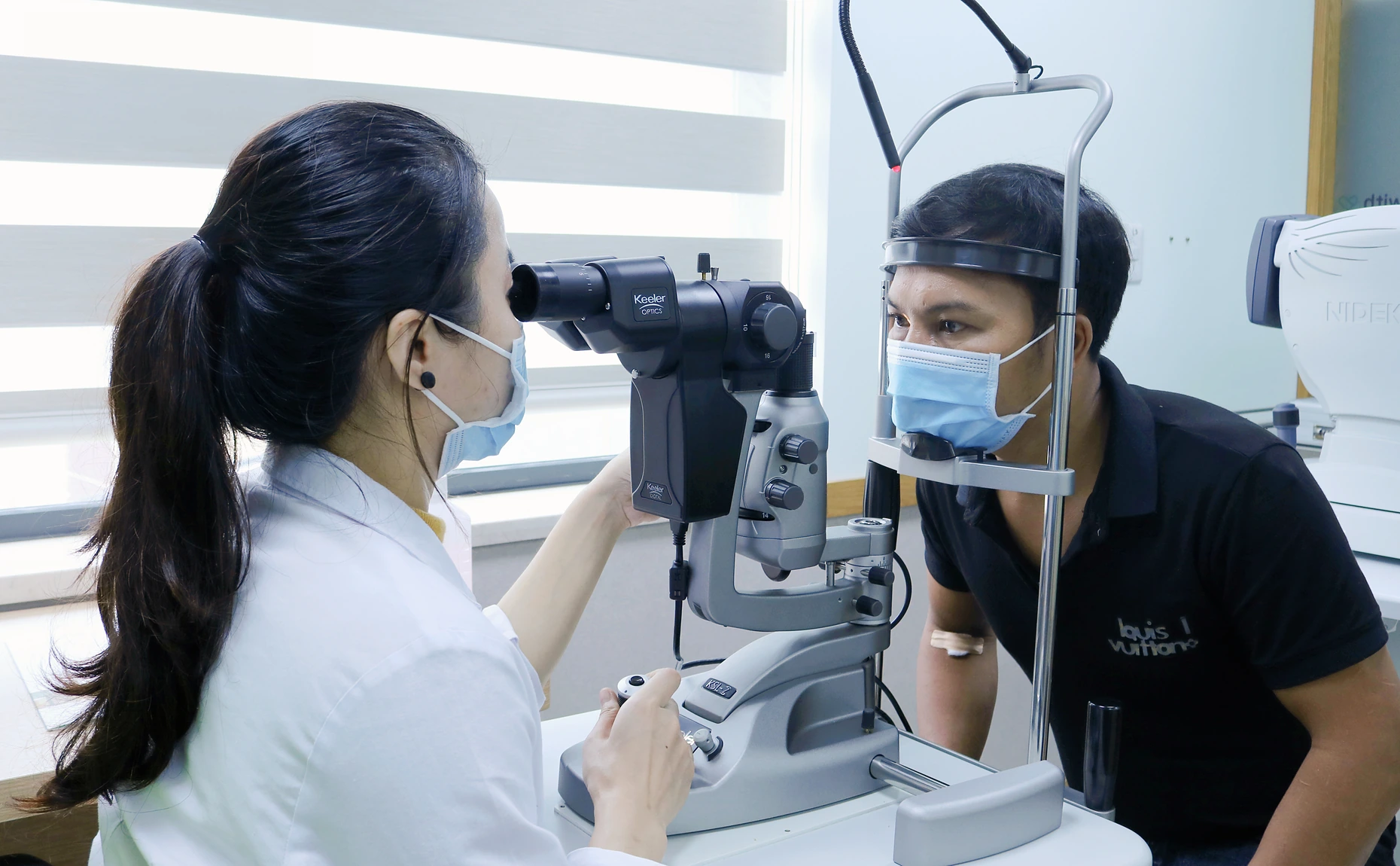
Common ocular pathologies examined and treated at SANTE
Through close multidisciplinary coordination (Endocrinology – Cardiology – Diagnostic Imaging), the Ophthalmology Department at SANTE Hospital provides comprehensive diagnosis and specialized treatment for all pathologies affecting both anterior and posterior segments of the eye:
Crystalline Lens Pathologies (Cataracts)
The crystalline lens functions much like a camera lens, focusing light precisely onto the retina. As natural aging or metabolic disruptions alter its protein architecture, the lens progressively loses its optical transparency.
Characteristic clinical indicators
- Progressive blurring of vision, akin to looking through a dense fog or a dust-coated glass pane.
- Severe glare and light sensitivity when exposed to sunlight or oncoming headlights at night.
- Dull, yellowed, or faded color perception, losing natural vibrancy.
- The phenomenon of “pseudomyopia” (second sight) in older adults (suddenly being able to read without reading glasses, yet distant vision becomes severely blurred).
Medical Solutions at SANTE
- Topcon slit-lamp biomicroscopy examination to precisely evaluate cataract morphology (nuclear, cortical, or posterior subcapsular cataract).
- Personalized nutritional counseling and vision preservation protocols during the onset phase.
- Indication for Phacoemulsification (Phaco) cataract surgery utilizing micro-ultrasound energy, replacing the lens with premium monofocal or multifocal intraocular lenses (IOLs), restoring immediate vision after just a 10 – 15 minute procedure.
Glaucoma (Ocular Hypertension)
Glaucoma is among the most critical conditions in ophthalmology, occurring when aqueous humor fluid within the eye is obstructed from draining, causing intraocular pressure to surge and compress optic nerve fibers, leading to atrophy. Any damage caused by glaucoma is permanent and irreversible.
• Angle-Closure Glaucoma (Acute Attack): Patients experience severe ocular pain, throbbing pain radiating to the ipsilateral side of the head, red eyes, rainbow-colored halos around light sources, accompanied by nausea or vomiting. This is an acute medical emergency, requiring prompt intraocular pressure-lowering intervention within the first 24 hours to prevent irreversible vision loss.
• Open-Angle Glaucoma (Chronic Progression): Painless with gradual peripheral vision loss; patients typically only discover the condition in its advanced stages.
| Comparison Criteria | Cataracts | Glaucoma (Elevated Intraocular Pressure) |
|---|---|---|
| Site of Lesion | Optical opacification of the crystalline lens (the light-transmitting medium) | Optic nerve (CN II) atrophy caused by elevated intraocular pressure |
| Pain Symptoms | Completely painless | Severe, sharp ocular pain radiating to one side of the head (acute form) |
| Recovery Potential | Full restoration of clear, sharp vision following Phacoemulsification surgery | Irreversible damage to the compromised optic nerve fibers |
| Screening Protocol at SANTE | High-magnification Topcon slit-lamp biomicroscopic examination | Keeler Non-Contact Tonometry + Optic Disc Ophthalmoscopy + Automated Visual Field Testing |
Refractive Errors & Computer Vision Syndrome (CVS)
At SANTE Hospital, the refractive examination protocol is conducted under rigorous clinical standards, seamlessly combining automated diagnostic measurements with real-world contrast visual acuity testing:
- Myopia (Nearsightedness): Blurred distance vision with clear near vision. SANTE specialists place strong emphasis on personalized protocols designed to effectively control myopia progression in school-age children and young adults.
- Hyperopia (Farsightedness): The eyes must constantly accommodate for both distant and near vision, frequently resulting in asthenopia (eye strain), forehead aches, and temporal headaches.
- Astigmatism: An irregular corneal curvature causes light rays to converge across multiple focal points, producing blurred images and ghosting at all distances.
- Presbyopia: A natural decline in crystalline lens elasticity occurring after age 40, requiring optical correction for near-distance activities such as reading or using digital devices.
- Computer Vision Syndrome (CVS): Symptoms of dryness, burning sensation, foreign body sensation, ocular hyperemia, and neck-shoulder tension resulting from prolonged blue light exposure and reduced blink rates during desk work.
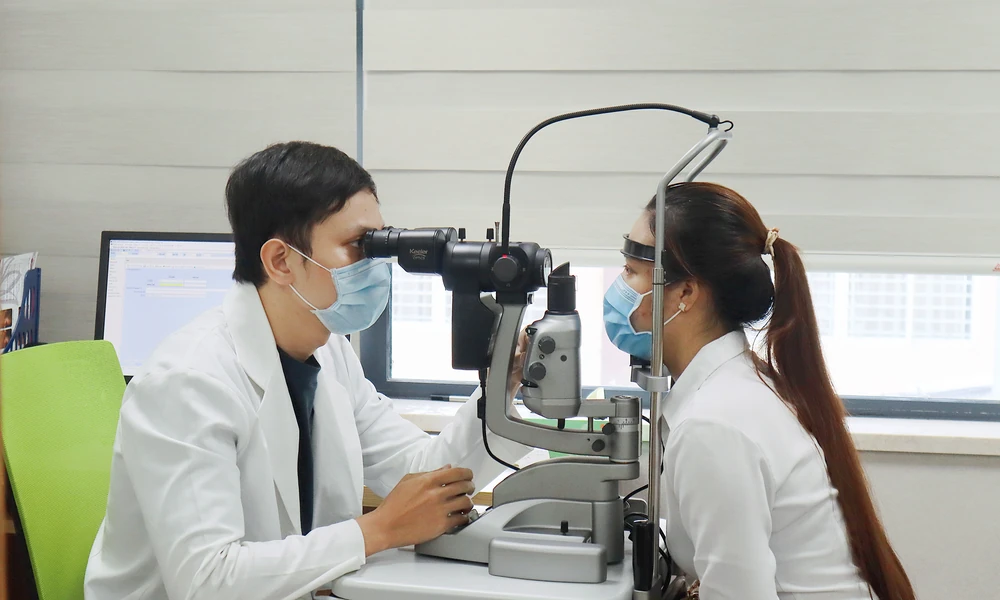
Corneal & Conjunctival Pathologies & Chronic Dry Eye Disease
The ocular surface serves as the primary line of defense against dust, bacteria, and the challenging tropical monsoon climate of Vietnam:
- Conjunctivitis (Pink Eye): Caused by adenovirus, bacterial infection, or seasonal allergies. Characterized by ocular redness, pruritus, and excessive discharge. It requires treatment guided by an antibiogram or indicated specialized medications; applying herbal poultices or self-administering corticosteroid eye drops is strictly contraindicated.
- Corneal Ulcer (Ulcerative Keratitis): A severe complication resulting from foreign body trauma, improperly managed corneal abrasions, or contact lens-related bacterial infections. Manifests with opaque white spots on the cornea, photophobia, and intense, sharp ocular pain.
- Pterygium & Pinguecula: A fan-shaped fibrovascular tissue growth extending from the inner or outer canthus onto the cornea. As it advances over the pupil, it causes vision impairment and induced astigmatism. SANTE performs painless pterygium excision combined with autologous conjunctival transplantation, achieving a near-zero recurrence rate.
- Chronic Dry Eye Syndrome: A quantitative or qualitative deterioration of the tear film. SANTE implements a multi-step therapeutic protocol: eyelid margin hygiene, Meibomian gland thermal compression, biocompatible artificial tear supplementation, and punctal plug occlusion for advanced cases.
Pathologies of the Eyelids, Lacrimal Apparatus & Orbit
Although ocular adnexal conditions may not pose an immediate threat of blindness, they cause persistent discomfort and significantly compromise aesthetic harmony:
- Chalazion & Hordeolum (Stye): Obstruction and inflammation of the sebaceous glands of the eyelashes. The SANTE surgical team performs gentle, strictly sterile incision and curettage to thoroughly evacuate the purulent core without leaving visible scars on the eyelid margin.
- Blepharitis: Marked by erythematous eyelid margins, burning pruritus, and chronic dandruff-like scaling around the eyelash roots.
- Entropion & Ptosis (Eyelid Inversion & Drooping): Continuous eyelash friction causing corneal ulcers or severe upper eyelid drooping that obstructs the pupil indicates the need for corrective oculoplastic surgery to restore both physiological function and aesthetic harmony.
- Nasolacrimal Duct Obstruction & Dacryocystitis: Persistent epiphora (excessive tearing), swelling, and purulent discharge upon pressure at the inner canthus are safely treated with lacrimal duct probing/irrigation or dacryocystorhinostomy (DCR) surgery.
Fundus Pathology & Diabetic Retinopathy
The retina is the delicate neurosensory layer that perceives light and transmits visual impulses to the brain. It is a key target organ profoundly damaged by systemic metabolic conditions:
- Diabetic Retinopathy (Diabetic Retinopathy): Prolonged hyperglycemia damages the retinal capillary walls, leading to microvascular leakage (hemorrhage), macular edema, and the proliferation of fragile neovascular vessels. Patients with diabetes are strictly advised to undergo a comprehensive fundus examination every 6 months at SANTE International Hospital, even when visual acuity appears completely normal..
- Age-Related Macular Degeneration (AMD): Degenerative damage to the central retina in adults over 55, resulting in the loss of central vision and visual distortion where straight lines appear wavy (metamorphopsia).
- Central Retinal Vein Occlusion (CRVO): “Eye Stroke” caused by thrombosis obstructing retinal blood flow, resulting in sudden vision loss within just a few hours.
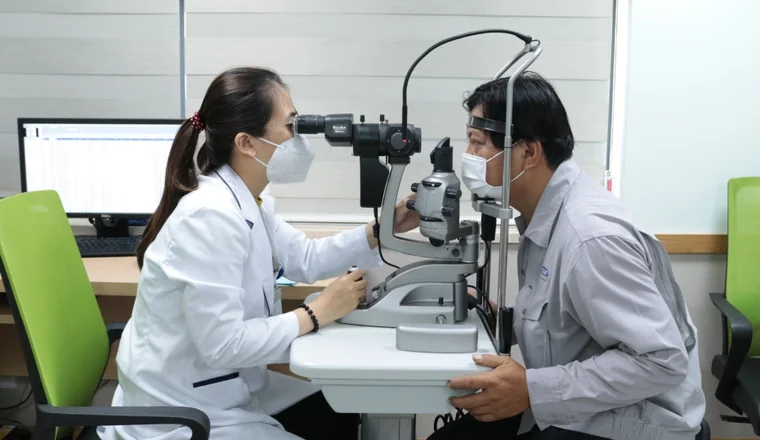
Critical Warning Signs (Red Flags) Requiring Emergency Ophthalmic Care
Do not hesitate or self-medicate at home if you or your loved ones experience any of the following “red flag” symptoms:
- Sudden loss of vision or sudden darkening of sight: Even if it lasts for only a few seconds before resolving, or persists continuously.
- Severe, intense eye pain: Accompanied by an ipsilateral headache, severely bloodshot eyes, and nausea.
- Seeing continuous flashes of light, or cobwebs and dark floaters across the visual field: A warning sign of a retinal tear or vitreous/retinal detachment.
- A sensation of a dark curtain falling, obscuring a portion of your visual field: A hallmark sign of progressive retinal detachment.
- Seeing a single object as two images (Diplopia): A warning sign of oculomotor nerve palsy or intracranial lesions.
- Mechanical trauma or chemical eye injury: Exposure to acids, alkalis, floor cleaning agents, mortar, or metal shavings in the eye. Immediately flush the eye with clean water and seek emergency care at SANTE Hospital without delay.
International-Standard 6-Step Medical Eye Examination Protocol at SANTE Hospital
To ensure absolute precision, safety, and ultimate comfort for every patient, the Department of Ophthalmology at SANTE Hospital implements a comprehensive 6-step clinical examination protocol:
-
Step 1: Comprehensive Reception & Medical History Intake
Nursing staff receive patients, documenting personal medical history, family history, abnormal visual symptoms, and evaluating underlying systemic conditions (such as diabetes, cardiovascular disease, and hypertension).
-
Step 2: International Standard Visual Acuity Measurement
Uncorrected and corrected visual acuity are measured using specialized digital optotype charts (Letters, Tumbling E, Landolt C) at the standardized clinical distance of 5 meters to accurately evaluate optical reception capability.
-
Step 3: Nidek Autorefraction & Keeler Non-Contact Tonometry
Utilizing the advanced Nidek auto-refractometer (Japan) to accurately determine spherical power, cylindrical power, and astigmatic axis. Intraocular pressure is then assessed with a gentle air puff via the Keeler system (UK) without physical contact with the eyeball, completely eliminating the risk of cross-contamination.
-
Step 4: Digital Slit Lamp Biomicroscopy Examination
Ophthalmologists utilize the high-definition Topcon biomicroscope (Japan) with razor-sharp optical magnification to thoroughly examine the eyelids, conjunctiva, cornea, anterior chamber depth, iris, and crystalline lens clarity.
-
Step 5: Funduscopy & Posterior Segment Evaluation (When Indicated)
For high-risk patients (presenting with diabetes, hypertension, or high myopia), the ophthalmologist administers mydriatic drops for detailed fundus examination to assess the retina, macula, optic disc, and retinal microvasculature.
-
Step 6: Diagnostic Conclusion & Treatment Protocol Consultation
The physician explains the clinical findings in detail, counsels on a personalized treatment regimen (pharmacotherapy, surgery, or ocular physical therapy), provides lifestyle recommendations, and schedules periodic follow-up appointments.
Advanced Ophthalmic Equipment & Technology at SANTE
SANTE Hospital prioritizes comprehensive investment in digital ophthalmic instrumentation and diagnostic systems imported from the world's leading biomedical brands:
🇯🇵 Nidek Auto Refractor & Keratometer (Japan)
A proprietary optical sensor processing algorithm delivers absolute precision in refractive measurements, facilitating rapid and accurate diagnosis even for active children or elderly patients with impaired vision.
🇯🇵 Topcon Slit Lamp Biomicroscope (Japan)
The premium optical system delivers superior resolution paired with a gentle coaxial LED light source, allowing ophthalmologists to examine microscopic details of the cornea and fundus with exceptional clarity.
🇬🇧 Keeler Non-Contact Tonometer (United Kingdom)
Intelligent automated tonometry utilizing a gentle micro-air puff delivers a completely painless diagnostic experience with zero need for topical corneal anesthesia, ensuring absolute sterility.
🏥 International-Standard Sterile Ophthalmic Procedure Suite
A dedicated minor surgery suite specialized in the management of pterygium, eyelid tumors, chalazion/stye incision, nasolacrimal duct probing, and emergency ocular foreign body removal under the general hospital's stringent infection control protocols.
Golden Advice for Vision Care & The 20-20-20 Rule
Maintaining healthy, radiant vision requires a refined balance of a wholesome lifestyle and scientific daily habits. Ophthalmology specialists at SANTE Hospital recommend:
Every 20 minutes of continuous work in front of a computer or mobile screen, shift your gaze toward an object at a distance of 20 feet (approximately 6 meters) for at least 20 seconds. This allows the ciliary muscles of the eyes to relax completely, preventing accommodative spasms and dry eye syndrome.
- Maintain conscious blinking: When focusing on digital screens, the blinking frequency decreases from 18 times per minute to only 5–7 times per minute. Please remember to blink regularly to keep the ocular surface hydrated and lubricated.
- Protect your eyes from UV rays: Always wear UV-protective sunglasses (UV400 standard) when outdoors to prevent macular degeneration and premature cataracts.
- Supplement essential vision-enhancing nutrients: Incorporate foods rich in Lutein, Zeaxanthin, Vitamins A, C, and E, and Omega-3 fatty acids (such as salmon, eggs, carrots, spinach, blueberries, and walnuts).
- Strictly avoid rubbing your eyes: Rubbing your eyes with your hands can scratch the cornea and increase the risk of developing keratoconus.
FREQUENTLY ASKED QUESTIONS (FAQ)
Proactively safeguard your and your family's precious vision with our dedicated ophthalmologists and advanced digital diagnostic technology.
📞 BOOK AN APPOINTMENT NOW: (+84) 28 2200 8686 – (+84) 901 295 399
⏰ Monday – Saturday: Morning 7:30 AM – 12:00 PM, Afternoon 1:30 PM – 5:00 PM | 24/7 Emergency: ((+84) 937 389 539)
💳 Full nationwide health insurance coverage & Direct billing for private insurance accepted